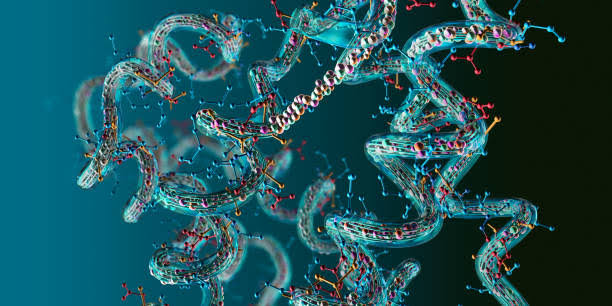
Topic: Protein Structure, Functions, and Interaction Studies
Target Audience: Students and Researcher
Learning Objectives
- Understand protein structure levels (primary, secondary, tertiary, quaternary).
- Visualize 3D protein structures using PDB resources.
- Explore protein function annotation databases.
- Understand the concept of protein–protein interactions (PPIs).
- Use databases to predict and visualize interaction networks.
- Relate PPIs to biological pathways and disease.
📅 Date: 05 & 06 October 2025
Day 1: Protein Structure and Function Analysis
- Introduction
- Briefly explain levels of protein structure.
- Highlight why studying protein structure is important for understanding function.
- Hands-on Activity – Retrieving & Visualizing Protein Structures
- Tool: RCSB PDB (www.rcsb.org)
- Task: Students search for a protein (e.g., Hemoglobin or p53).
- Download PDB file.
- Open it in PyMOL
- Explore domains, active sites, secondary structures.
- Hands-on Activity – Functional Annotation
- Tool: UniProt (www.uniprot.org)
- Task: Search the same protein in UniProt.
- Identify molecular function, biological processes, and domains.
- Cross-link to Pfam/InterPro for domain analysis.
- Wrap-up and Q&A
- Recap difference between structure and function.
- Discuss how structure influences biological activity.
Day 2: Protein–Protein Interaction (PPI) Studies
- Introduction
- Importance of PPIs in signaling, metabolism, and disease.
- Hands-on Activity – PPI Network Construction
- Tool: STRING database (string-db.org)
- Task: Input the same protein (from Day 1, e.g., p53).
- Generate PPI network.
- Explore confidence scores, direct vs indirect interactions.
- Download network image.
- Hands-on Activity – Functional Pathway Analysis
- Tool: KEGG Pathway / Reactome
- Task: Take one interaction partner from STRING.
- Check its pathway involvement in KEGG/Reactome.
- Discuss its biological relevance (e.g., tumor suppression, signaling pathway).
- Wrap-up and Q&A
- Summarize how structural and functional studies integrate with interaction studies.
- Discuss applications in drug discovery and disease biomarker identification.
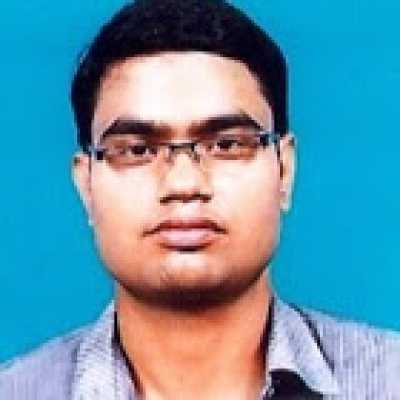
Dr. Ashwani Kumar
Dr. Ashwani Kumar is currently working as an Assistant Professor in the Department of Biotechnology at Chandigarh University, Gharuan, Mohali, Punjab, India. He earned his Ph.D. in Bioinformatics from Jaypee University, Solan, Himachal Pradesh, India, in 2018. Dr. Kumar completed his Post-Doctoral research at CSIR-IHBT, Palampur, in 2021. His work focuses on computational mining of genomics and proteomics data to gain insights into Alzheimer’s disease.
Dr. Kumar holds an MSc in Bioinformatics and a BSc in Medical Sciences. He has qualified for the NET (National Eligibility Test) and GATE (Graduate Aptitude Test in Engineering) in Life Sciences in December 2010 and March 2011, respectively. With a total of 7 years of teaching and research experience, Dr. Kumar has contributed significantly to the field of bioinformatics.